

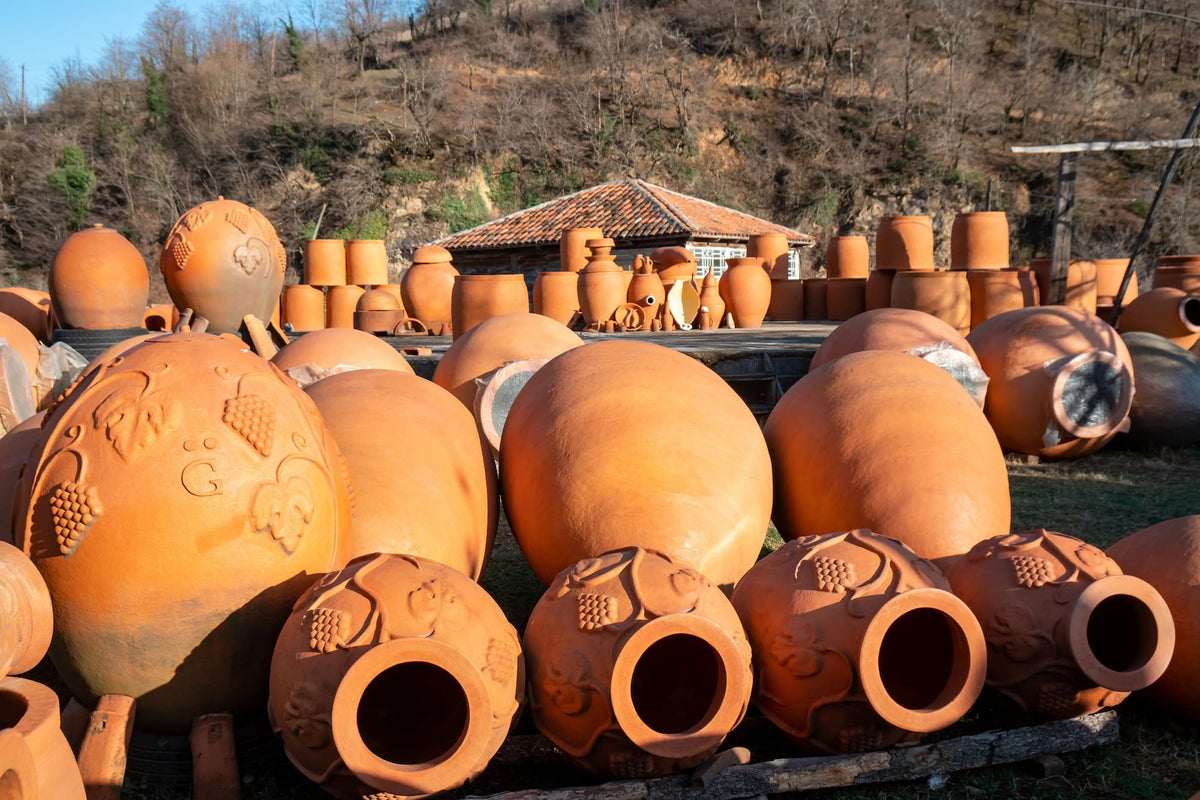
What is a qvevri?
Pronounced ‘kveh-vree’ and also spelled kvevri, a qvevri is an egg-shaped earthenware vessel traditionally buried in the ground and used to make, age and store wine.
It’s one of Georgian wine’s most recognizable traditions, but it isn’t a grape variety or a single wine style. Both red and amber wines can be made in qvevri, with different approaches across regions and producers.
What do qvevri wines taste like?
Qvevri tells you something about how a wine was made, but not everything about how it will taste. The grapes, region, skin contact and producer’s choices all matter.
An amber wine made with white grape skins may bring golden-fruit flavors, savory notes and a tannic grip. A red qvevri wine made from Saperavi may offer dark fruit, bright acidity and a more powerful structure. Neither description is a recipe every bottle must follow.
-
Amber (orange or skin-contact whites)
Shop Amber WinesWhite grapes such as Kisi, Rkatsiteli or Mtsvane can produce amber wines when fermented with their skins. Depending on the bottle, explore notes of dried apricot, citrus peel, tea, herbs or nuts, with texture ranging from gentle to firmly grippy.
-
Red
Shop Red WinesRed qvevri wines made from grapes such as Saperavi can combine deep color and dark-fruit flavors with freshness and tannic structure. Look to the individual bottle for its sweetness, aging and tasting notes.

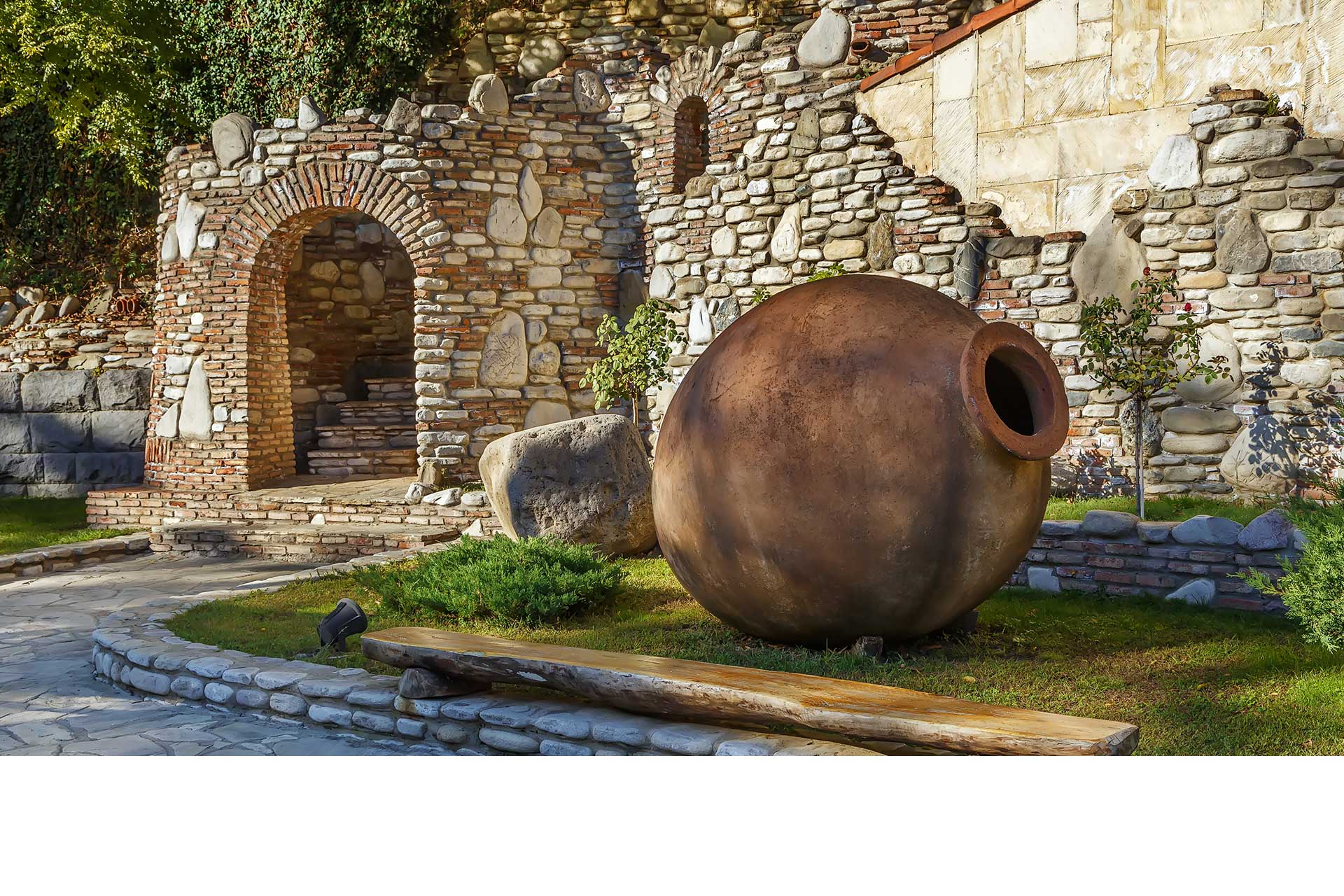
How big are qvevri?
Big enough to make moving one a serious undertaking. Qvevri come in different sizes, from smaller vessels to examples holding several thousand liters.
The larger ones can accommodate a person, which matters when it’s time for maintenance. Once a qvevri is buried and the cellar is built around it, cleaning happens in place.
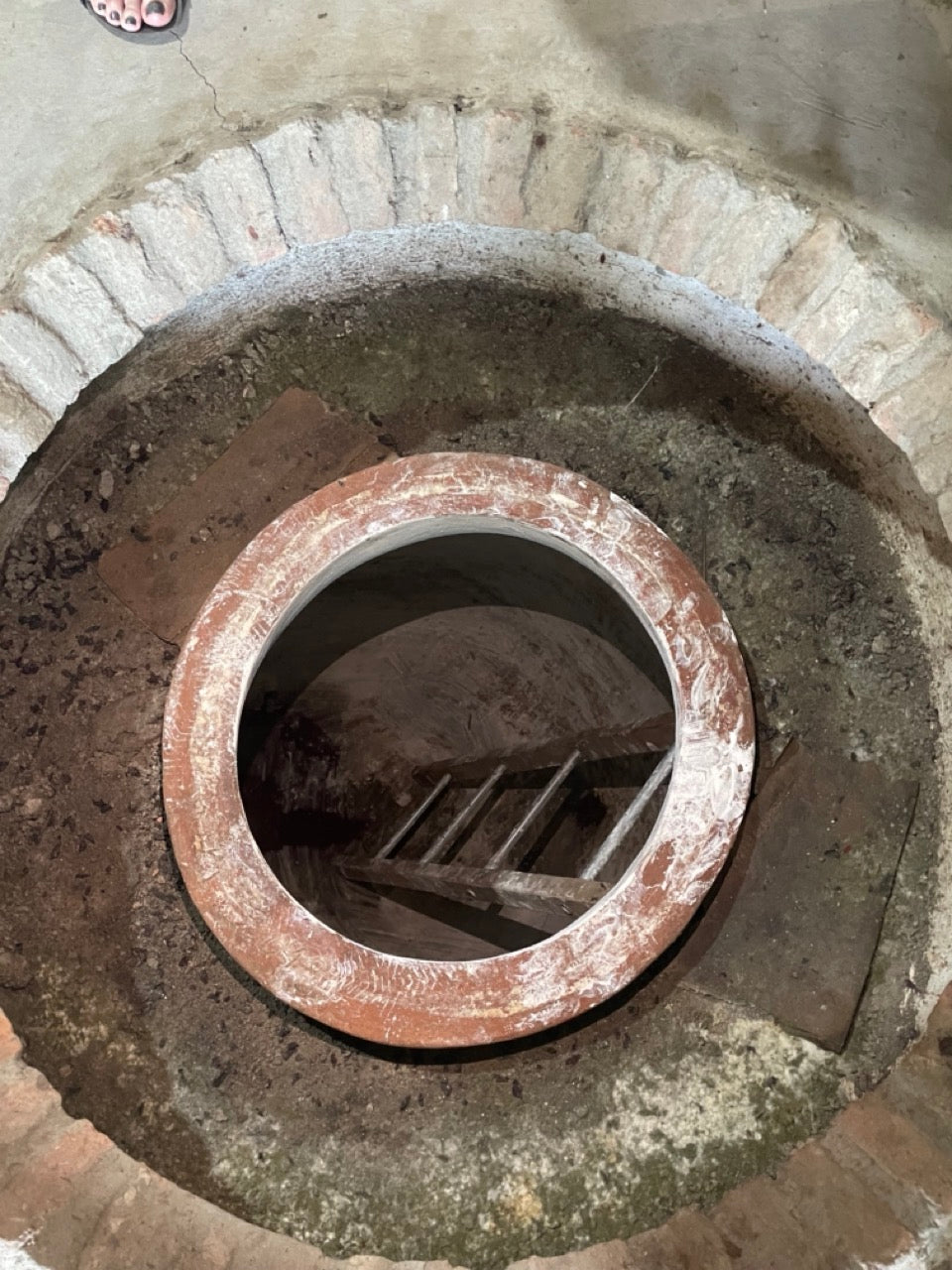
Wait. Climb into?
Yep. In traditional cellars, qvevri are buried with their openings accessible at floor level. The surrounding earth helps moderate temperature, while the vessel stays in place for fermentation, aging and repeated use.
Cleaning and maintaining these vessels is skilled work. The ladder in the photograph gives a sense of the scale involved: this isn’t a pot you simply lift into the sink.

How does winemaking in qvevri work?
Grapes are harvested and processed, then the juice goes into a prepared qvevri. Depending on the wine and regional tradition, the winemaker may include different amounts of skins, seeds and stems.
During fermentation, yeast converts grape sugars into alcohol. Contact with grape solids contributes color, flavor and tannin. How much material is included, and how long it stays with the wine, varies: red and amber wines do not necessarily follow the same timetable.
After fermentation and the chosen period of skin contact or aging, the wine is separated from the solids. The producer decides how to handle settling, further aging, filtration and sulfur use. A qvevri alone doesn’t tell you those choices.
The vessel is then carefully cleaned and prepared for reuse. With proper care, qvevri can serve successive generations, making maintenance as important to the tradition as fermentation itself.
Try our favorite qvevri wines
-
 Qarvani - Anapea Village - Kisi/Khikhvi/Mtsvane Qvevri Dry Amber (Orange) Wine 2020Qarvani - Anapea Village - Kisi/Khikhvi/Mtsvane Qvevri Dry Amber (Orange) Wine 2020
- Regular price
-
$27.00 - Regular price
-
$27.50 - Sale price
-
$27.00
Quick view
-
 Vazisubani Estate Rkatsiteli 2018Vazisubani Estate Rkatsiteli 2018
- Regular price
-
$24.00 - Regular price
-
- Sale price
-
$24.00
Quick view
-
 Vazisubani Estate Kisi Qvevri 2019Vazisubani Estate Kisi Qvevri 2019
- Regular price
-
$26.00 - Regular price
-
- Sale price
-
$26.00
Quick view
-
 Winiveria Kisi Qvevri 2017Winiveria Kisi Qvevri 2017
- Regular price
-
$28.00 - Regular price
-
- Sale price
-
$28.00
Quick view


